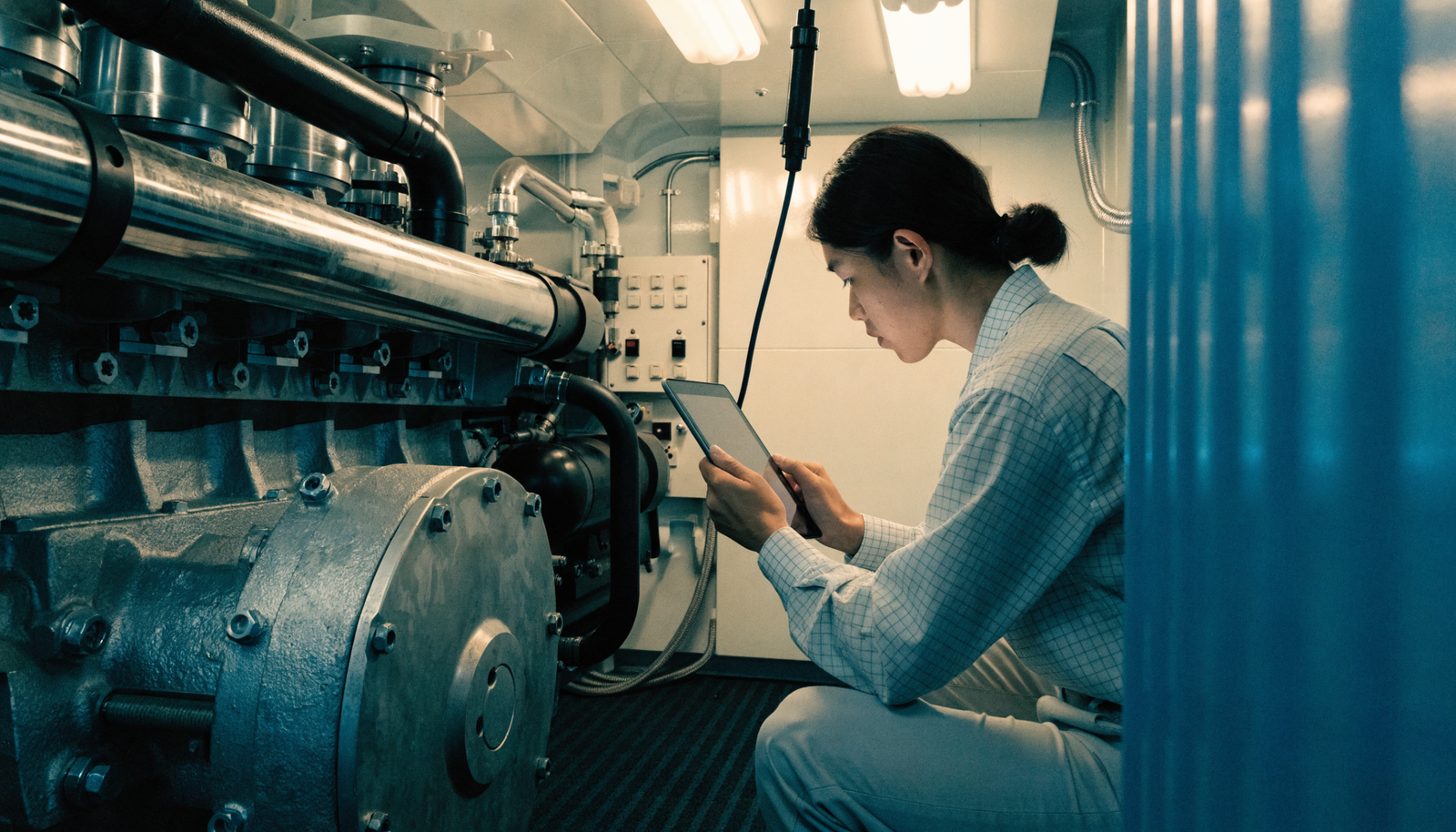
A boat never breaks down at a convenient time. It fails on charter morning, on the delivery leg, on the busiest weekend of the season — because that’s when it’s working hardest. Reactive maintenance means you find out the expensive way, every time. Predictive maintenance means the boat tells you first.
Here’s how it works, and why running a fleet on data beats running it on hope and a clipboard.
Reactive vs predictive: the real cost difference
Reactive maintenance pays for the breakdown — the tow, the emergency call-out, the ruined charter, the part that has to ship overnight. Predictive maintenance spots the same problem while it’s still a cheap, scheduled fix. Same fault, wildly different bill, and only one of them cancels your weekend.
What it takes to run it
Three things: sensors on the systems that matter, a place for that data to live, and something smart enough to spot the trend before it becomes a failure. The sensors are the easy part now — the value is in turning the stream of readings into a clear “service this, soon” instead of a wall of numbers nobody reads.
Why one system beats a folder of spreadsheets
Most fleets track maintenance across a clipboard, a couple of spreadsheets, and someone’s memory. That falls apart at scale, and it can’t see patterns across vessels. Put every boat on one system and the data starts working for you — shared history, automatic reminders, and early warnings across the whole fleet instead of one boat at a time.
Put every vessel on one system
ZipMarine brings your whole fleet into one place — monitoring, maintenance, and management built so problems surface early instead of at the worst possible moment. Tell us what you run and we’ll show you what one system looks like.